

Coaching the Quiet Player
Getting the Best from Introverts on Your Team. Especially for Youth Coaches


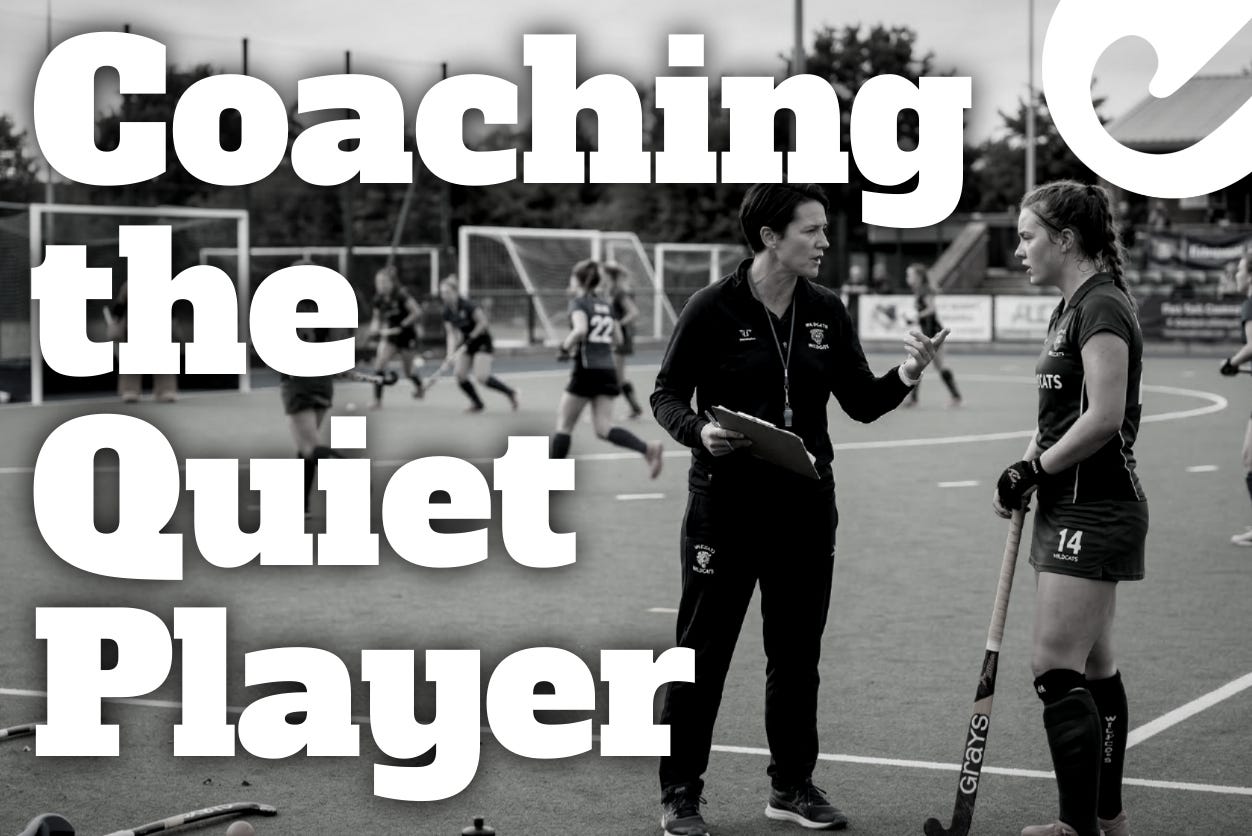
You know the player. Every coach does. Technically, one of the most gifted on the squad. Reads the game two passes ahead. Finds space other players do not even see. But in the huddle, nothing. During team talks, eyes down, listening, processing, never the first to speak. On the pitch, rarely shouts for the ball, even when wide open. And over time, without anyone making a conscious decision about it, that player starts to disappear. Not because the talent fades, but because louder teammates fill the space, the energy, and eventually the opportunities.
The thoughts below is about that player. More specifically, it is about what we as coaches miss when we let volume dictate visibility, and what changes when we start coaching for personality, not just performance.
If you have ever watched a quiet player drift to the edges of the group and wondered whether you could be reaching them better, this one is for you.
TL;DR
Most coaching environments unintentionally reward extroversion. The players who speak up, react visibly, and demand attention tend to get more feedback, more game time, and more belief invested in them. Introverted players process information differently, not less effectively, but through observation, reflection, and internal rehearsal rather than external expression. When coaches adjust how they communicate, structure feedback, and design training environments, they unlock the potential of players who may already be among the smartest readers of the game on the team. These thoughts draw on five different masterclasses with world renowned experts, to explore why quiet players get overlooked, what that costs the team, and what practical changes coaches can make starting this week.
Sources
In case you want to more in depth, these were the sources we looked at:
The Pygmalion Effect, featuring Ric Charlesworth 🇦🇺 , Andreu Enrich 🇪🇸 , and David Harte 🇮🇪.
Diversity is a Superpower, featuring Rein van Eijk 🇳🇱 🇩🇪
Team Talks: Emotions, Energy, and Engagement, featuring Mati Vila 🇦🇷
The Cognitive Process of Coaching, featuring Henk Verschuur 🇳🇱
Values Based Coaching, featuring Adam Commens 🇦🇺 🇧🇪
The Coaching Culture That Rewards Volume
Let’s be honest about something. Most coaching environments, at every level, are built for extroverts. The players who talk the loudest in the circle get seen as leaders. The ones who celebrate the hardest after a goal get noticed. The ones who demand the ball, call for switches, and shout instructions are the ones we tend to describe as “having presence” or “showing character.”
None of that is wrong. Those players matter. But here is the question worth sitting with: what happens to the players who lead differently?
In The Pygmalion Effect, Andreu Enrich presents four findings from research on how teacher and coach expectations shape outcomes. When a coach believes in a player, that player receives a warmer climate, more content, more opportunities to respond, and more constructive feedback. The reverse is also true. When a player does not register on a coach’s radar, because they are quiet, because they do not demand attention, they gradually receive less of all four.
Now think about your squad. Who gets more of your words during a session? Who do you naturally gravitate toward in a break? It is usually the player who engages you, who asks questions, who reacts. The introvert standing three metres away, absorbing everything, often gets less. Not because you have decided they are less talented. But because the feedback loop between coach and extroverted player is faster and louder, and over time that gap compounds.
Ric Charlesworth puts it plainly: “Almost the worst thing you can do with a player is sit them on the bench and not use them, because the message then is, I don’t believe in you.” The same principle applies to communication. When a quiet player consistently receives less feedback, less eye contact, fewer individual moments, the unspoken message lands the same way. You are not seen.
Different, Not Less
One of the most damaging assumptions in coaching is that quiet equals disengaged. It does not. Introverted players are often doing enormous amounts of cognitive work. They are watching, mapping the game, running mental simulations. They just do it internally.
Henk Verschuur explains this beautifully in The Cognitive Process of Coaching. He describes how players process information differently depending on their cognitive state, their attention level, and even the pace at which a coach delivers a message. “If this coach is talking slowly,” Verschuur notes, “possibly their attention level or heart rate will go down a little bit and therefore they perceive more.” In other words, the speed and volume of communication directly affect how deeply a player can process it.
For an introverted player, a loud, high-energy team talk can actually reduce comprehension. Not because they are not listening, but because the environment does not match their processing style. They need a beat longer. A quieter space. A moment to organise their thoughts before being asked to respond.
This is not a weakness. This is a different cognitive pathway. And if you watch closely during matches, you will often find that the players who process most deeply are the ones making the best decisions under pressure. They have already rehearsed the scenario internally before the ball arrives.
Adjusting How You Give Feedback
So what changes? It starts with how you communicate.
