


The goal of the game is to win. That means scoring at least one time more than your opponent. Because this is hockey, that requires certain behaviour in the circle or D. So who better than Alyson Annan to explore the circle behaviour that gets us this winning goal…
Enjoy these two clips below besides the preview above. But this is a masterclass worth subscribing for…
Positioning in the circle
What to do and what to avoid…
Rebounds
How to behave in the circle, when not in possession and rebounds…
Alyson Annan
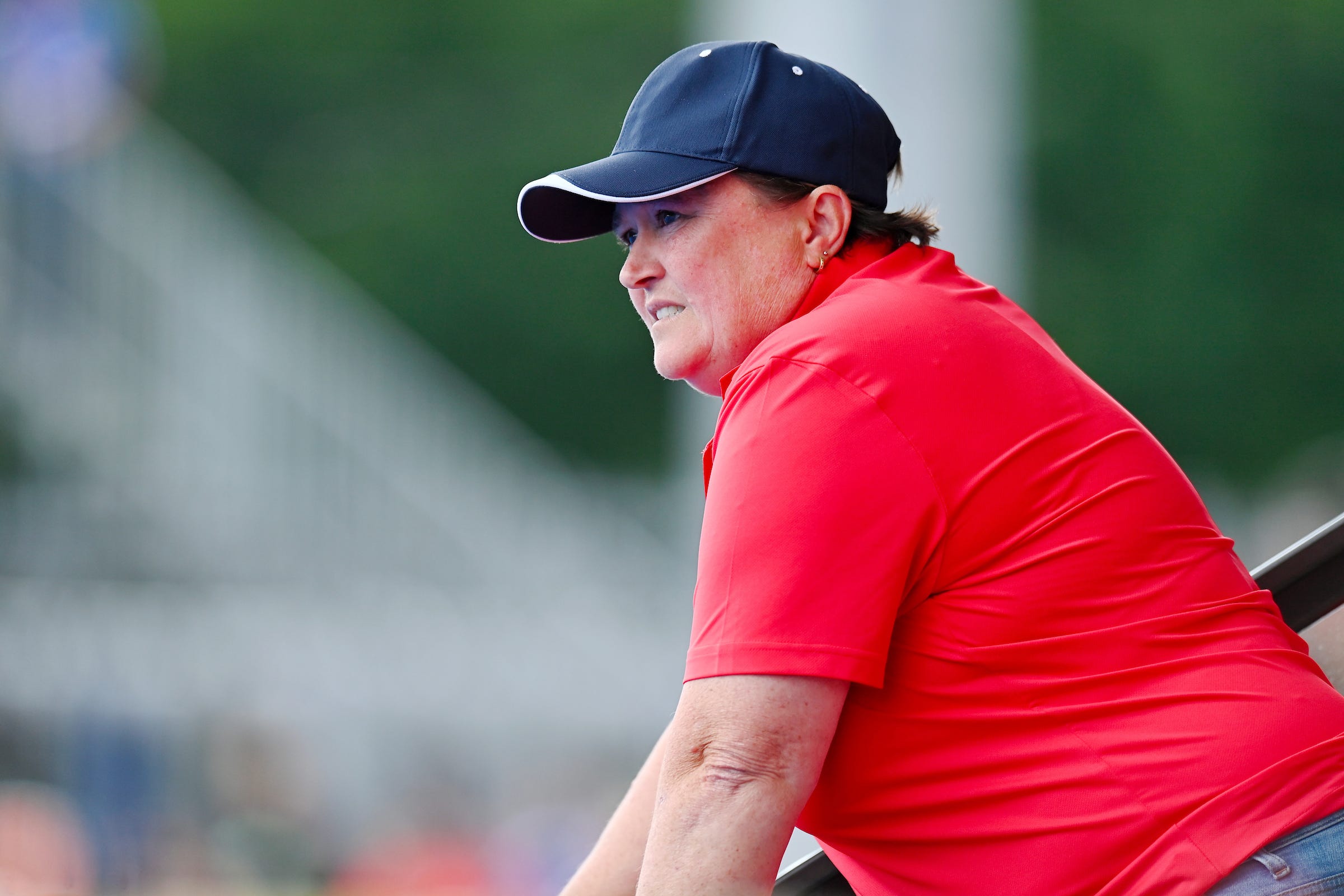
Annan was a striker for Australia between 1993 and 2001. Winning two Olympic gold medals, 2 World Cup gold medals and many others in an era of domination by Australia in women’s hockey.
In 2000 she moved to the Netherlands where she played for Klein Zwitserland before she became a coach. She has coached both men and women teams in the Dutch hoofdklasse before she became the head coach for the Dutch women in 2015. Coached by Annan the Dutch women won a silver medal in Rio 2016 and gold in Tokyo 2021. Today she is the head coach for the women of China.
The One Thing Every Field Hockey Coach Should Take from This Masterclass
If there’s one essential insight that every field hockey coach should internalize from this masterclass, it’s the importance of training and coaching circle behavior as a series of interconnected, intention-driven actions—rather than as isolated technical skills.
In high-level field hockey, so much coaching and training time is devoted to the mechanical aspects of the game: the execution of passes, the relentless repetition of drills, and fine-tuning individual techniques. Too often, circle work ends up being little more than a glorified shooting exercise. But the truth is, as Alyson Annan emphasizes, the difference between teams that consistently create goal-scoring chances—and those that don’t—comes down to the quality, clarity, and intent behind behaviors inside and around the attacking circle.
“When we talk about training, goal scoring, and circle behavior, we talk about very... we do very little training on circle behavior. We do a lot on running the ball in and hitting that or receiving it and hitting that, but we do very little on circle behavior.”
— Alyson Annan
Why This Matters
The “how” and “why” of movement, positioning, and ball transfer just before and inside the circle directly impact outcomes. Creating space, reading defenders, having pre-agreed attacking principles, and knowing when not to move are often more influential on scoring success than details of the striking technique. If we want our teams to be more efficient and effective in the circle, we must embed these behaviors in our daily coaching DNA.
Practical Application for Coaches
Redefine your terminology in training: Stop referring to passes simply by their execution (hit, push, slap). Instead, demand clarity of intent from your players. Are they making a build-up pass, an attacking pass, or above all, a scoring pass?
Train the intent, not just the execution: When running circle-entry drills, pause play and ask: What is your intent with this pass or movement? Who is your target, and what outcome are you aiming for? Embed this questioning in your sessions.
Focus on off-ball behaviors:
Repeatedly reinforce “get numbers in the circle, but not too many.”
Demand your attackers stop drifting out; stay in positions that create and exploit space, rather than always chasing the ball or the play.
Challenge your team to gather information before receipt (“Where’s the goal? Where are your teammates? Where are the defenders? Where is your space?”).
Celebrate success metrics beyond goals: Reward and review the “scoring pass” as a KPI separate from actual shots or goals. Emphasize effective rebounds, secondary movements, and passes leading to secondary shots; this will increase your team’s overall efficiency.
This shift won’t come overnight. It requires a consistent language from the coach, deliberate design of exercises, and a willingness to coach “behaviors over repetitions.”
As Alyson Annan puts it:
“Goal scoring and circle behavior: it’s a mindset, not just technique... It’s the combination of all those behaviors—before and in the circle—that builds a killer instinct.”
Why You’ll Want to Dive Deeper

This session isn’t just another technical breakdown. It’s an opportunity to fundamentally rethink how your teams use the circle, from gathering information, to positioning, to the timing and intent of production passes and finishes. The video contains detailed tactical conversations, real game clips annotated for learning, and practical solutions for common coaching headaches: drifting, ball-watching, and inefficient circle entries.

If you coach young players, senior teams, or at the international level, these insights are the difference between efficiency and frustration. Get into the details of what true “circle behavior” means. Unlock the entire masterclass analysis and go deep on how to foster outstanding circle play in your squads.


